
How To Grow Your Business With The Right Digital Marketing Strategies
After running my website and business for a couple of months, I've come to realize a few things about Digital Marketing and driving traffic to your business, how to set up an effective online presence, and the importance of having a multi-pronged approach to customer acquisition that I thought would be great to share with potential customers. Although I personally don't offer any services related to digital marketing, I believe that many potential customers who run small businesses as well will find this information useful.
So let's get down to it, shall we?
Why an online presence?
First, let's talk about the most essential issue: why have a website at all? Unlike a decade ago, most businesses nowadays have a website or at least a social media page, be it a small cafe or a medium sized agency. There are a couple of reasons for this, but the proliferation of the internet into or daily lives is perhaps the strongest factor that has more or less forced most businesses to be at least present online. Almost all our decisions nowadays are driven by consulting online sources: Google, Instagram, TikTok, Amazon, etc. Perhaps people have forgotten some of the earliest contenders to be the Yellow Pages of the internet like Foursquare, but the fact remains that the internet is used as a gateway to decision making of all kinds: What to buy? What to eat? What to do?
The result is that businesses who do not have an online presence, tend to get left behind in the wake of their competitors who do. Only established players who have a large and loyal enough customer base, or who offer some unique selling point that their online counterparts are not able to replicate, can afford to ignore the internet now.
To be online or not to be online... that is the question.
Why not just a Facebook page / Instagram profile?
Indeed, why not? A website costs money to have design done, hosting provided, and even technical support when issues occur. This is apart from all the marketing and SEO you will need to do for a website to be visible when people search for related or relevant products or services.
A social media profile on the other hand, is free, can be marketed more easily with hashtags or built in advertising tools, and has built in communication functions like chat to answer customer queries.
Well, as someone who has firsthand experience with getting their business Instagram account banned (yep, still banned) from Instagram and with no reason provided, I can attest that it isn't always smooth sailing as you think. And while on first look, social media may look like a cheap and effective alternative to having a website, there are some issues that only become apparent once you have yours up and running.
Complaints, complaints, complaints
One great thing about social media (well Facebook and Google Maps at least) is that customers can leave you reviews if they loved your service! Getting reviews for your business can be a great way to improve your reputation and make more sales. However, it's important to be careful about how you go about getting reviews. You don't want to get yourself into any kind of conflict with customers or reviewers. If you have a good relationship with both customers and reviewers, it's easy to get reviews by asking customers to write positive reviews or by giving reviewers incentives like free products or discounts. It's also possible to create review prompts on your website or in email campaigns.
That being said, keep in mind reviews are a double-edged sword. While I do not doubt the quality of goods or services you may be offering, but there are risks inherent in being able to be reviewed as as fake reviews, complaints on your profile that are not addressed (unless you have someone actively managing it), and the ability to be tagged or @ mentioned across negative statuses by others on the platform could lead to a lot of negative publicity.
Feedback... no just kidding, complaints.
In fact, recently in Singapore, a case in which a competitor used fake reviews to sabotage the ratings of a rival eatery was widely publicized. Consider that in this instance the perpetrator was caught and identified; however there are hundreds of fake reviews being posted each day, both positive and negative, and the likelihood of being able to identify each and everyone of them is extremely slim. Conversely, the chance of being a victim of fake reviews with an online presence on social media sites is much higher given the fact that many company weapon fake reviews to boost the supposed popularity of their products and create the opposite impression for their competitors.
Perhaps the worst part about fake reviews is that you can't delete them, or remove them. You can only reply to them to explain your side of the story, and even then to the casual observer it's a he said vs she said. Furthermore, replying to reviews may not always be the best idea; overzealous business owners have been ridiculed for defending their business and insulting customers over online reviews.
On a website you own however, you have a greater degree of control over what is displayed to visitors, allowing you to curate the type of experience you want for your potential customers. You can put first and foremost the 5 star reviews you've received from real customers and list them as references. Visitors don't see any reviews except the ones you want them to see. You don't get any unwanted messages or comments unless you leave a line of contact. And finally, you can change the name of your business, website or product at any time. So if you're thinking about jumping on the social media bandwagon, do your research first to make sure it's the right decision for your business and that you're not opening yourself up to potential problems.
Social media is important, but it's not everything!
Almost every digital marketer you speak to today will tell you how having a social media presence is a must for any business. A social media page is a great way to connect with potential and current customers online and build your brand. Without a doubt, social media is an important tool for businesses to use in order to build relationships with their customers; with an active social media presence, businesses can create a connection with their customers and generate leads or sales through interactions on social media platforms.
That being said, social media alone will not drive customers to your business. In fact, interest or interactions on your social media more often than not does not translate to a proportionate increase in traffic to your business! At the end of the day, in order to generate traffic, be it to your social media profile or your website, you need the right marketing strategies that I will go into some detail later in this article.

All your data are belong to- I mean, please login to Facebook.
Online e-commerce / marketing platforms
So okay, social media may not be the best alternative to having your own website, but if you're selling products why not onboard on an e-commerce platform like Shopee, Lazada, Qoo10 or Amazon.sg? Surely, given the reputation and customer base of these websites, it must be easier to get more customers than starting from scratch, right?
Well, not really.
E-commerce platforms are great for a few reasons: 1) you can get up and running almost immediately, 2) you get to tap on whole ecosystem of tools available for sellers such as inventory management, payment processing, marketing tools, etc., 3) e-commerce platforms often have a higher organic traffic numbers than social media platforms, and 4) you can easily create and manage your sales channels such as online advertising, social media, and offline marketing. However, like social media, ecommerce platforms do not guarantee that your customers will come from these channels.
Also, there are some downsides to e-commerce platforms. The similarity of products by different sellers on these platforms mean that you are immediately competing in a marketplace where customers can easily compare between similar products. To make matters worse, new sellers on e-commerce platforms often face stiff competition from established players due to the lack of reviews and confirmed purchases. And just like social media platforms, the issue of having reviews on an e-commerce site opens you up to the exact same issues.
Abandoned cart!... Yes that one.
I believe that the biggest downside however, that stems from starting your business on an e-commerce platform is the issue of branding. Branding is the only means for companies to separate themselves from a bevy of similar offerings; if you sell products to customers on an ecommerce platform, it's going to be difficult to compete with drop-shippers on price point and with more established brands on things like product loyalty and a well-developed aftersales service. On e-commerce platforms however, the highlight to the customers are the products, not the individual sellers who are distributing them. This is intentional; the idea behind ecommerce platforms is to drive loyalty and brand recognition to the platforms and not the individual stores on them, as it does not matter to the e-commerce site if a customer purchases a good from one seller or the other, the platform still rakes in its cut from advertising fees and listing/processing charges.
In fact, many brands that start on e-commerce platforms move to developing their own websites and digital storefronts after having developed sufficient reputation for having good products and customer loyalty. This not only allows them to perform more in-depth branding a product differentiation from their competitors, it also allows them to avoid the fees charged by e-commerce platforms for all products sold through their own storefront.
So, in summary, while starting off with a social media profile or on an e-commerce platform for physical products is not a bad idea, there will come a time where the need to create your own online presence will become indispensable.
So you've decided to have an online presence, what now?
Okay, okay I get it. Having an online presence is crucial. I'll set one up and then I'll get more business right?
Well, again, yes and no. Having an online presence is important but it is what having that online presence allows you to do that is more important. The biggest benefit of having an online presence, as mentioned at the start of this article, is having one more avenue to drive more customers towards your products and services.
Driving traffic to your online platform
There's no one surefire way to drive traffic to your online platform. However, by using digital marketing strategies like paid search, social media ads, and website marketing, you can generate a significant amount of traffic. Additionally, you also have the option of promoting your website through email marketing and content marketing, which allows you to create long-term relationships with potential customers. By using the right digital marketing strategies, your business can improve its overall performance and increase sales.
There are essentially three types of digital marketing one can choose from: online advertising, social media marketing, and online branding. Each has its own set of tools and strategies that you can use to reach potential customers and drive conversions but it's also important to note that there are increasing overlaps between each of these strategies. Therefore, the suggested route to take when it comes to digital marketing is not to focus on one but to develop all of them concurrently.
Online advertising
Online advertising is the most common form of digital marketing because it’s affordable, easy to use, and can be effective for both small businesses and large enterprises. The most common types of online advertising include paid search, display advertising, and organic search.
- Paid search is perhaps the most cost-effective form of online advertising because it allows businesses to target specific keywords and phrases in order to increase traffic. Paid search also allows businesses to set bids (the amount they are willing to pay for a click) and reach their target audience quickly and easily.
- Display advertising is other type of online advertising that businesses use to promote their products and services on websites that have slots for advertisements. Display ads are built into websites so that customers see them as they browse the web. They can be placed on the side or the top of web pages, in articles, or even embedded within videos.
- Organic search is highly dependent on SEO (or Search Engine Optimization). Effective SEO can help you drive more targeted visitors to your website and increase your conversion rates. More of an art than a science, the idea behind SEO is to push your online presence into a higher position or ranking on search engines when related terms are being searched for. Also known as Search Engine Results Page (SERP) ranking, the premise is that if someone searches for a related search term to your business online (e.g. you sell flowers and they search for "florists near me"), with a higher RSERP ranking, the more likely it is that the person searching will click on that link that leads to your business!
Ads that click with you!
Social media marketing
As mentioned earlier, a social media presence is not only a cheap and easy way to start an online presence, it's also a great way to develop some branding and connect to your customers. In addition, social media marketing is a powerful tool for driving traffic to your business website. By using social media platforms like Facebook, Twitter, and LinkedIn, you can create a community of followers who can be your advocates. Additionally, you can use social media to drive website traffic by promoting website content on your social media platforms.
This can be done through paid advertising or content creation which is interesting and relatable, thus resulting in people sharing or promoting your content to their friends and followers. As you can see, there are some overlaps between using social media to perform marketing organically and using the paid advertising options offered by these platforms.
Online branding
Last but not least, the fabled unicorn of organic search or organic growth in traffic. Although I mentioned this earlier when talking about online advertising and organic search results, a lot of the impetus for organic growth is how you brand your business online. By providing a relatable brand name to would-be or repeat customers, you naturally create an increase in the likelihood that your product or service shows up higher in search results and thus, a greater influx of organic traffic to your site.
So there you have it! Digital marketing is a great way to connect with potential and current customers online. By using social media, you can create a relationship with them and hopefully convert them into buyers. Digital ads, SEO, and a well-managed ecommerce platform can help businesses increase their traffic and reach more potential customers. But remember, that doing one or the other usually isn't enough and you need to take a multi strategy approachj to digital marketing in most cases.
Difference between Google and Facebook ads
Ok, so I understand I need to advertise to drive traffic to my platform, what ads do I create?
Google Ads, Facebook Ads, they're the same right? Not really!
Digital ads on Google and Facebook are very similar, with the main difference being that Google displays more organic results while Facebook displays more advertorial results.
Which advertising platform?
Each platform has its own strengths and weaknesses. For example, Google Ads is great for targeting people who are interested in your product or service. Facebook Ads, on the other hand, is great for reaching a wider audience. Both platforms have their limitations, but by using the right platform for the right campaign, you can reach your target market and generate leads or sales.
There are pros and cons to each platform, so it's important to carefully weigh the options before making a decision.
Google AdWords:
Google AdWords is one of the most popular digital advertising platforms because it allows businesses to place ads on Google search results pages (SERPs). This makes it very easy for businesses to reach a large audience quickly. Plus, because AdWords is an auction-based platform, businesses can set specific prices for their ads and control how much money they spend on each campaign.
However, there are some disadvantages to using AdWords. For example, AdWords campaigns can be expensive and often require a lot of up-front investment.
Facebook Ads:
Facebook ads are a great option for businesses that want to reach a wider audience than Google ads can. Facebook allows businesses to target their ads based on a variety of demographics and interests. Plus, Facebook ads are very effective at driving clicks and conversions.
However, Facebook ads have some disadvantages as well. For example, they can be expensive and time-consuming to set up and manage.
So which platform is best for you?
The best way to decide which platform is best for your business is to carefully weigh the pros and cons of each platform. Then, make a decision based on your specific needs and goals. Lastly, there are other options local business could consider like Carousell, which is both an e-commerce platform and allows you to post ads to drive traffic to your business.
Impressions vs clicks vs conversions
I've set up my advertising account and they are asking me about clicks or conversion? I don't understand! Help!
When measuring the performance of your digital marketing campaigns, it's important to consider impression vs click vs conversion rates. To explain in detail:
- Impressions refers to the total number of times your ad was displayed on a Google search result page (SERP). This includes both organic and non-organic results.
- Clicks refers to the number of times someone clicked on your ad in order to visit your website. This number includes both direct clicks and indirect clicks, which is when someone who has been shown your ad also visits a website that you've advertised on.
- Conversions, meanwhile, is simply the number of people who actually bought something as a result of seeing your ad.
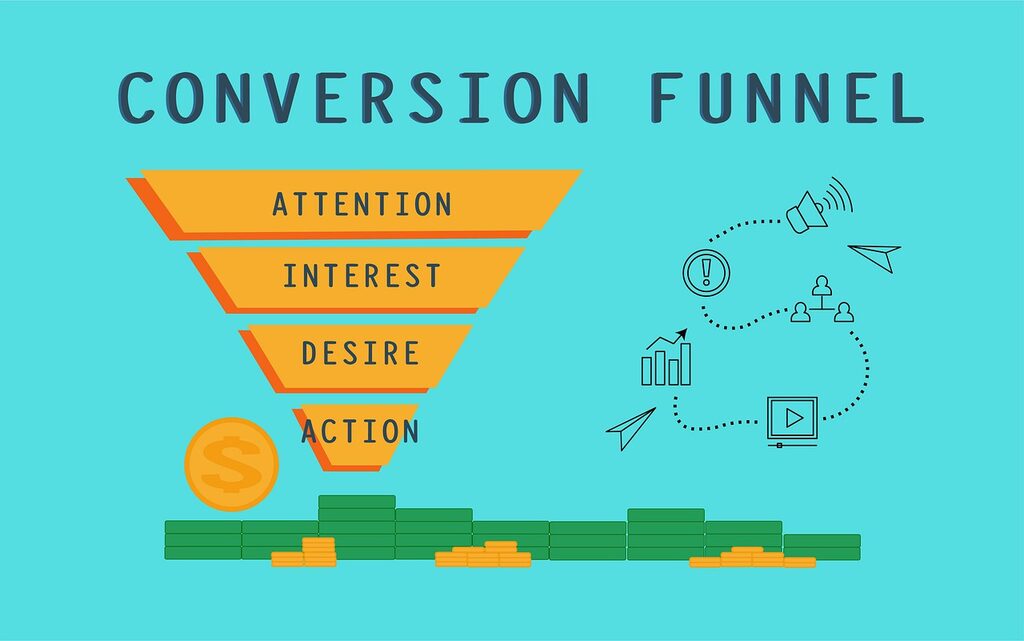
What's your marketing funnel?
So, let's break this down further:
If you're targeting Google or Facebook ads, you'll want to focus mainly on impressions and clicks, as that provides your brand and social media page exposure. However, which metric is important for your business also depends strongly on the type of business you have and the type of site you are driving traffic to. A site/business selling products, for example, would benefit from tracking conversions instead, as this directly ties to the number of products being sold.
Organic growth is important
Last but not least, it's important to remember that there is no magic bullet to gain traction. However, by adopting organic growth strategies like creating high-quality content, building a strong social media following, and optimizing your website for search engines, you can help your business grow over time. Whether you choose to use an e-commerce site or build your own website, the key to growing your business is to drive traffic to your platform and understand the metrics that can help you track your success.
As someone who's tried paid advertising and had their Instagram banned without reason, I can safely advocate for any business to have their own online presence with their own website and to focus right away from the start generating content that will help with SEO and organic search. Sure, ads do drive traffic, but honestly without the right amount of SEO and organic growth from search or referrals, the likelihood that your ad spend will exceed your revenue for a new small business is very high. In fact, having learnt the lesson of the importance of SEO and content creation, I would even propose not going with online ads for your site till you have sufficient content. Ads can help SEO and SERP ranking but only if there's already enough to work with.
And of course, if you ever need help with setting up a website or have some doubts on the right strategy to take with your business, feel free to comment, drop me a WhatsApp message or send me an email. Remember, I offer negotiable packages for sole props and small businesses! Don't wait and reach out to me today!
